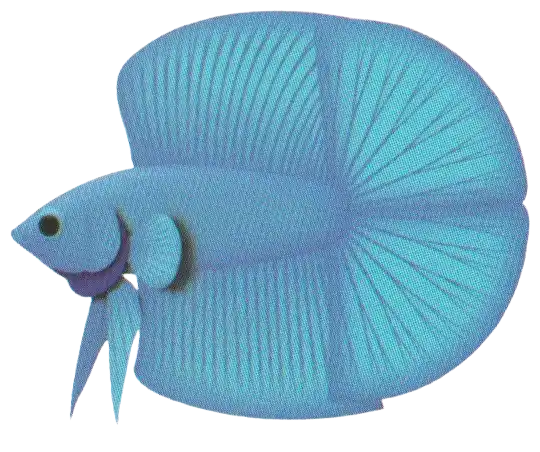
Standard Breeds of Ornamental Betta Fish in Thailand (Long Fin Double Tail)
A Long Fin Double Tail betta has fins longer than those of bettas normally found in nature. Its Caudal Fin is not less than 2/3 of its body length and is divided into two clearly separated, equal sections.
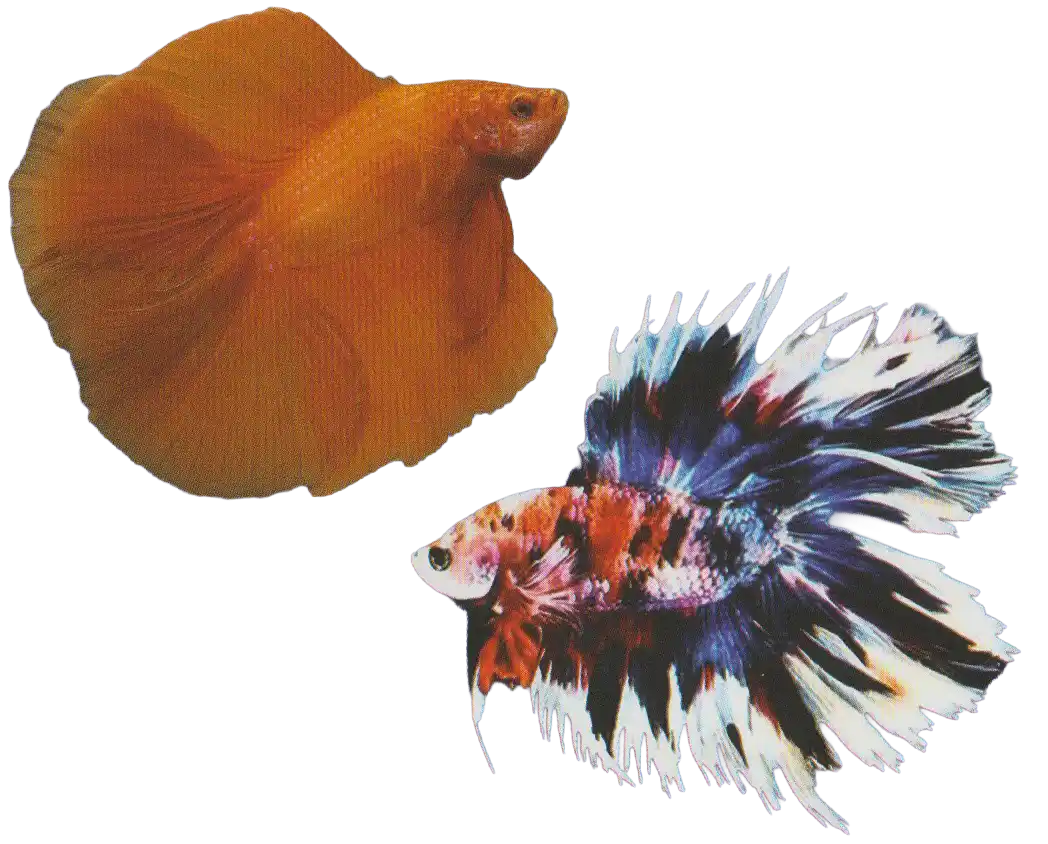
Type 4.1
DT Brush Tail
Body
The body is cylindrical and laterally compressed, complete in form, evenly long and slender, with fins of equal size on both sides.
Pectoral Fins
The fins are equally complete on both sides.
Pelvic Fins
The fin rays are unbranched, long, slender, and straight, without bending or crossing, and have pointed tips.
Dorsal Fin
The base begins toward the front. The fin is taller than it is thick. When fully spread, it touches the first caudal-fin ray. The rays are unbranched, which is a distinctive characteristic.
Anal Fin
The edge is smooth. The fin is long and slender, with a slight curve, without bending, and has a pointed tip. It extends below the edge of the Caudal Fin. The rays are unbranched, which is a distinctive characteristic.
Caudal Fin
The Caudal Fin is not less than 2/3 of the body length and is divided into clearly separated upper and lower sections. The central division should reach the base of the Caudal Fin. Both sections should be equal in size. The fin rays are arranged as a Brush Tail, with long, sharply pointed tips, and branch into not more than 2 rays (either 1 or 2 rays).
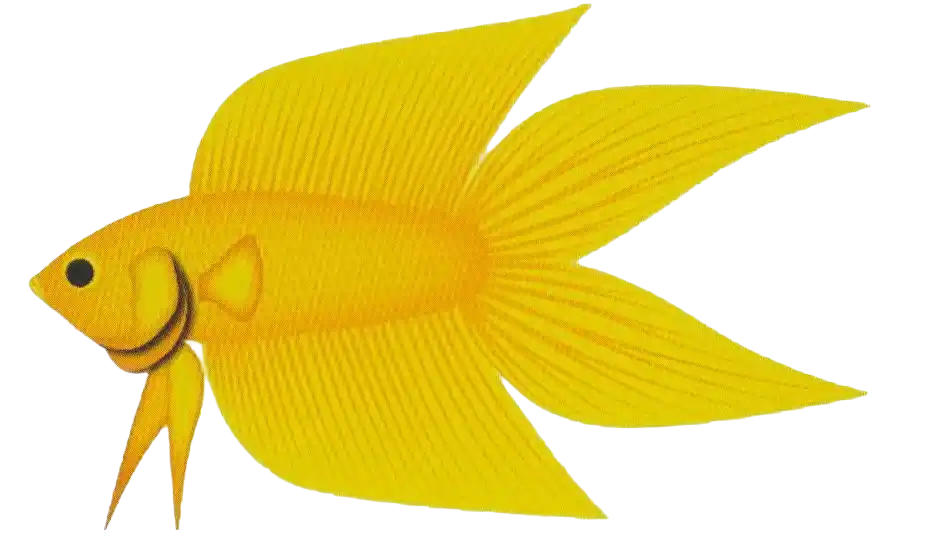
Type 4.2
DT Crowntail
Body
The body is cylindrical and laterally compressed, complete in form, evenly long and slender, with fins of equal size on both sides.
Pectoral Fins
The fins are straight, long, and slender, with pointed tips and no bending. Their edges are smooth or serrated like spines.
Pelvic Fins
The fins are straight, long, and slender, with pointed tips and no bending. Their edges are smooth or serrated like spines.
Dorsal Fin
The base begins toward the front. The fin is taller than it is thick. When fully spread, it touches the first caudal-fin ray. The fin is spine-like, and the depth of the serrated edge is not less than 1/3 of the Dorsal Fin length.
Anal Fin
The fin is spine-like, and the depth of the serrated edge is not less than 1/3 of the Anal Fin length.
Caudal Fin
The Caudal Fin is not less than 2/3 of the body length and is divided into clearly separated upper and lower sections. The central division should reach the base of the Caudal Fin. Both sections should be equal in size. The fin has crown-like spines, and the depth of the serrated edge is not less than 1/3 of the Caudal Fin length.
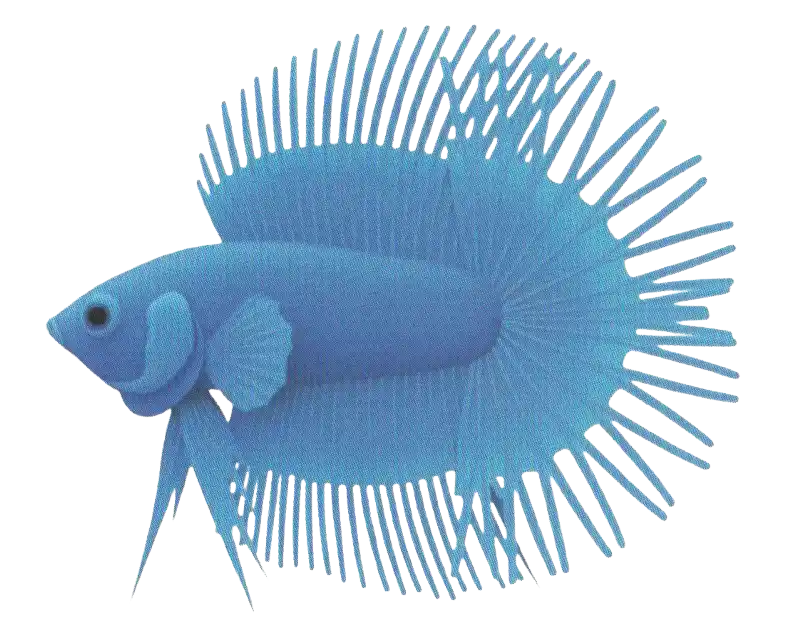
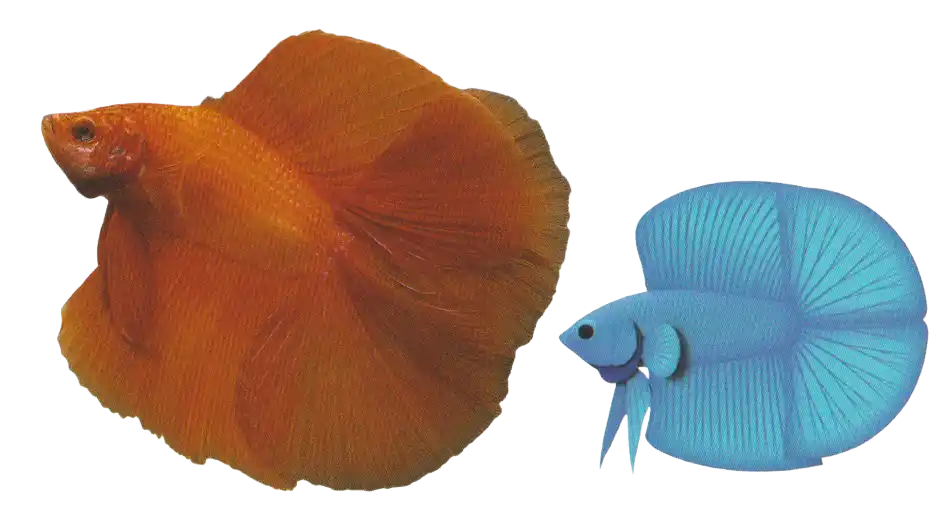
Type 4.3
DT Halfmoon
Body
The body is cylindrical and laterally compressed, complete in form, evenly long and slender, with fins of equal size on both sides.
Pectoral Fins
The fins are equally complete on both sides.
Pelvic Fins
The fins are straight, long, and slender, with pointed tips and smooth edges.
Dorsal Fin
The base begins around the middle of the body toward the head. The fin has a rounded shape. The first Dorsal Fin ray is long, not less toward the tail. The Dorsal Fin is slightly higher than the tip of the Caudal Fin.
Anal Fin
The edge is smooth. The fin is long and slender, with a slight curve, and is not bent.
Caudal Fin
The Caudal Fin is not less than 2/3 of the body length and is divided into clearly separated upper and lower sections. The central division should reach the base of the Caudal Fin. Both sections should be equal in size. The caudal-fin rays branch into not less than 4 rays. The outermost upper and lower tips form angles like the letter “B”.
Editorial note: The source wording about the first Dorsal Fin ray is ambiguous; the translation above stays close to the original and does not introduce a new criterion.
Type 4.4
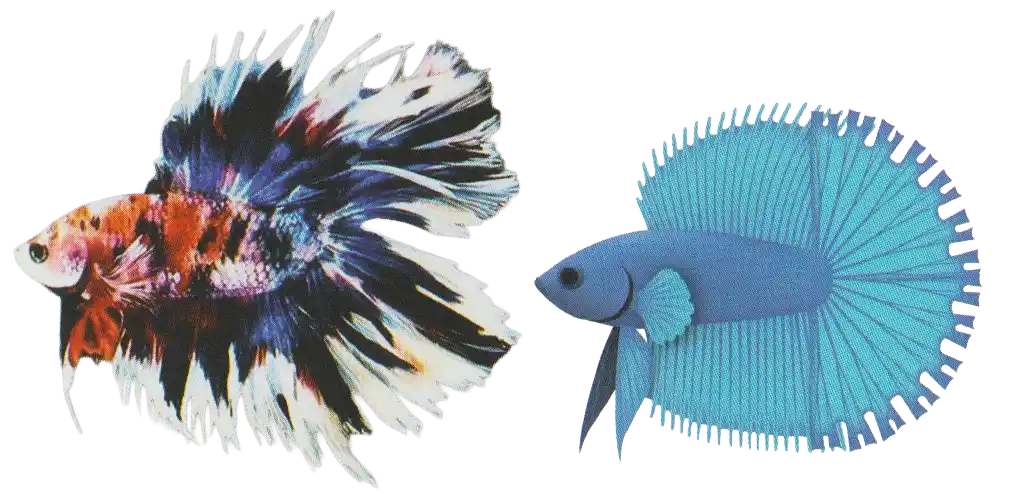
DT Halfsun
Body
The body is cylindrical and laterally compressed, complete in form, evenly long and slender, with fins of equal size on both sides.
Pectoral Fins
The fins are straight, long, and slender, with pointed tips and no bending. Their edges are smooth or serrated like spines.
Pelvic Fins
The source labels this item “Pelvic Fins”, while its description states that the Dorsal Fin base begins around the middle of the body toward the head. The Dorsal Fin is slightly taller than it is thick; when fully spread, it touches the first caudal-fin ray. Its edge is serrated like spines, with a depth not less than 1/4 of the Dorsal Fin length.
Anal Fin
The fin is serrated into spines. The depth of the serrated edge is not less than 1/4 of the Anal Fin length and is similar to, or slightly greater than, the caudal-fin edge.
Caudal Fin
The Caudal Fin is not less than 2/3 of the body length and is divided into clearly separated upper and lower sections. The central division should reach the base of the Caudal Fin. Both sections should be equal in size and have sun-ray-like serrated spines. The depth of the serrated edge is not less than 1/4 of the Caudal Fin length. The outermost upper and lower tips form angles like the letter “B”.
Type 4.5
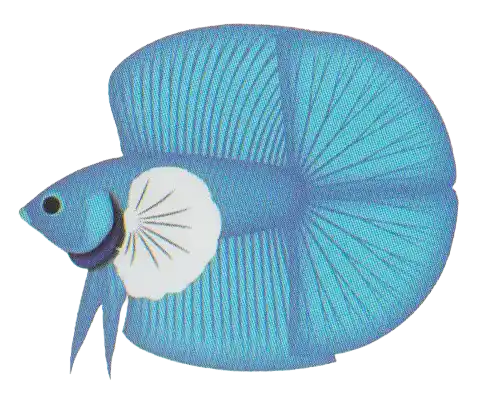
DT Dumbo Long Fin
A DT Dumbo Long Fin is a long-fin betta whose Caudal Fin is divided into clearly separated upper and lower sections. The central division should reach the base of the Caudal Fin, and both sections should be equal in size. Its fin structure and body conform to its type, but its Pectoral Fins, or ear fins, are exceptionally large—more than twice the normal size.
Type 4.6
DT Giant Long Fin
A DT Giant Long Fin is a long-fin betta whose Caudal Fin is divided into clearly separated upper and lower sections. The central division should reach the base of the Caudal Fin, and both sections should be equal in size. Its fin structure and body conform to its type, but its size is larger than normal. Its body length, measured from the tip of the mouth to the base of the Caudal Fin, is more than 5 centimetres.